
Murals
How to Choose a Custom Wall Mural for Any Room
Choosing a custom wall mural transforms a room, but it requires careful thought. This guide walks you through selecting the right design, size, and material for your space, ensuring a perfect fit and a stunning result.

The short version
- Measure your wall’s full width and height at its widest and tallest points, then add a small margin for trimming.
- Choose a design that complements your room’s existing colour palette, furniture, and overall mood.
- Consider the scale of the mural’s pattern; large-scale designs can make a room feel more spacious.
- Select a paper type based on the room’s humidity levels and your preferred installation method.
- Always order a sample to check the true colours and paper texture in your home's unique lighting.
To choose a custom wall mural, you must balance four key factors: the precise dimensions of your wall, the room’s purpose and style, the design’s colour and scale, and the correct paper material. Getting these elements right ensures your mural is a perfect, impressive fit for your space.
What to check before you begin
Before measuring, a quick assessment of your space will help ensure a smooth project. Taking a moment to check these details can prevent surprises during installation.
- Wall Condition: Examine the surface you plan to cover. Murals adhere best to smooth, clean, and dry walls. Note any cracks, holes, or damp spots that will need to be repaired first. A heavily textured wall may require sanding or skimming for a good finish.
- Fixtures and Fittings: Locate all electrical outlets, light switches, and thermostats. Knowing their positions helps you visualise how the design will be affected, as you will need to trim around them.
- Room Lighting: Observe how natural and artificial light hits the wall at different times of day. Light can alter the appearance of colours, which is another reason why ordering a sample is so important.
- Clear Workspace: Ensure you have enough room to work by moving furniture away from the wall. A clear area is essential for laying out panels and using a stepladder safely.
What is a custom wall mural?
A wall mural is one single, continuous image that covers an entire wall, much like a large-scale piece of art. Unlike traditional wallpaper which features a smaller, repeating pattern on standard rolls, a mural is a complete scene that does not repeat.
A custom wall mural takes this concept further by being printed to the exact dimensions you provide. At Casavono, every mural is made to measure. This means the design is perfectly scaled to fit your specific wall size, ensuring no important details are awkwardly cropped or lost. This process guarantees the composition of the artwork looks intentional and balanced in your room.
Your mural arrives as a set of numbered panels, each 30 inches (76 cm) wide, which are rolled in hanging order. You install them from left to right, edge to edge, without any overlapping. The result is one magnificent, seamless image that becomes the focal point of the room.
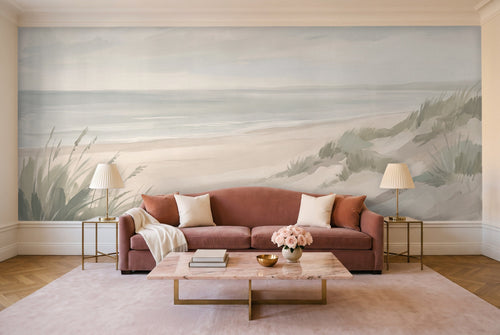
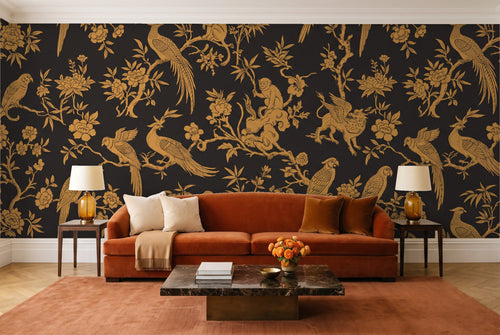
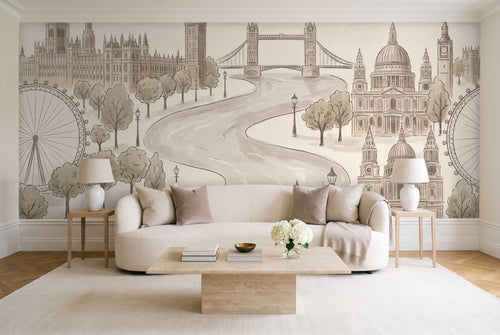
Murals made to your measure
 Raffles, EtchingPrinted to your wall size
 Ichiyo, BlushPrinted to your wall size
 Coral Charm, PosyPrinted to your wall size
How do I measure my wall for a mural?
Accurate measurements are the foundation of a perfectly fitted custom wall mural. Because each mural is printed to order, taking the time to measure correctly is the most important step. Follow this simple process to get it right.
Always use a metal tape measure for accuracy, as fabric ones can stretch. It is also helpful to have a second person to hold the other end of the tape for wide walls.
- Measure the width. Measure the full horizontal width of the wall from corner to corner. If the wall has different widths at the top and bottom, use the widest measurement.
- Measure the height. Measure the full vertical height of the wall from the ceiling to the floor or skirting board. If the wall height varies, use the tallest measurement.
- Ignore obstacles. Measure the wall as one complete rectangle. Do not subtract areas for windows, doors, or built-in furniture. The mural is printed as a whole image, and you will trim away these sections during installation.
- Add a margin. Once you have your widest width and tallest height, add about 4 inches (10 cm) to each measurement. This extra bleed provides a safety margin to account for slight variations in wall straightness and allows for precise trimming.
For example, imagine your wall is not perfectly rectangular. You measure the width at the top as 140 inches (355.6 cm) and at the bottom as 141 inches (358.1 cm). You must use the widest measurement: 141 inches.
If the height on the left is 95 inches (241.3 cm) and on the right is 96 inches (243.8 cm), you must use the tallest measurement: 96 inches. After adding the 4 inch (10 cm) margin, your final dimensions to order would be 145 inches width (141 + 4) and 100 inches height (96 + 4).
Once you have your final dimensions, you can use a free wallpaper calculator to confirm the amount of material needed. This ensures you order the correct size for a flawless installation.
How do I choose a mural design and style?
The right design connects with your personal style and sets the emotional tone for the room. Start by considering the room's primary function and the atmosphere you want to create. Your mural should complement the space, not compete with it.
For a living room or dining area where you entertain guests, a bold, conversation-starting design can be very effective. A dramatic cityscape such as the East River, Midnight mural can add depth and sophistication. In a bedroom or private study, the goal is often to create a calm, restorative retreat. A quiet botanical or a soft floral design like Ichiyo, Blush can establish a serene atmosphere.
Think about the existing style of your furniture and decor. Is it modern, traditional, minimalist, or eclectic? Look for a mural that shares a similar design language. A geometric pattern might suit a contemporary space, while a vintage-inspired landscape could be perfect for a room with classic furniture. The goal is to create a cohesive look where the mural feels like an integrated part of the design scheme.
Find your statement piece
Explore hundreds of designs, each made to measure for your wall.
What colour mural should I choose?
Colour has a powerful effect on the mood and perceived size of a room. When choosing a custom wall mural, look at its dominant colours and how they will interact with your existing palette of paint, textiles, and furniture.
One approach is to choose a mural with colours that are already present in your room. This creates a harmonious, coordinated feel. For example, if you have blue cushions or a grey sofa, a mural featuring similar shades of blue and grey will tie the room together beautifully.
Alternatively, you could use the mural to introduce a new accent colour. A mostly neutral room can be energised by a mural with a pop of vibrant colour. Just be sure this new colour is repeated in a few small accessories, like a vase or a throw blanket, to make it feel intentional.
Consider the light. The amount of natural light a room receives will affect how colours appear. Light, airy colours can help brighten a darker room, while darker, moodier tones can make a large, bright room feel cosier.
A monochrome design like the Black And White Eucalyptus Botanical Mural is highly versatile and works well in various lighting conditions. Because colours can vary on screen, it is always wise to order a sample to see how it looks in your own home.
How does the scale of the mural affect the room?
The scale of a mural refers to the size of the elements within the design itself, not the size of the overall mural. Choosing the right scale is crucial for achieving the desired visual impact and ensuring the room feels balanced.
Large-scale designs, such as murals with oversized flowers, wide landscapes, or bold abstract shapes, are excellent for making a space feel larger. With fewer, bigger elements, the design feels less cluttered and more expansive. This is why panoramic wall murals can make a room look bigger, as they draw the eye across the wall and create a sense of depth.
Small-scale patterns can be effective in smaller spaces like a powder room or a hallway, where they add texture and interest without overwhelming the eye. In a large room, however, a very small or dense pattern might look too busy from a distance.
Because Casavono murals are made to measure, the design is scaled to fit your wall's proportions. This is a significant advantage over standard-sized murals, where a large design might be cropped awkwardly to fit a smaller wall. With a custom fit, you can be confident that the full artistic vision of the mural is preserved.
Which paper material is right for my mural?
Choosing the right paper is just as important as choosing the right design. The material affects the mural's finish, durability, and installation method. Consider the room's function and your comfort level with DIY projects when making your selection.
Casavono offers three distinct PVC-free paper options, each suited to different needs and environments. Understanding their features will help you pick the perfect one for your project.
| Paper Type | Key Feature | Best For | Installation |
|---|---|---|---|
| Non-Pasted | Classic smooth matte finish and the most durable option. | High-traffic areas like hallways and living rooms. | Requires you to apply wallpaper paste to the wall. |
| Pre-Pasted | Subtle textured matte finish with a water-activated adhesive. | Kitchens and bathrooms with everyday humidity. | Submerge or spray the back with water to activate the paste. |
| Peel & Stick | Self-adhesive backing that is repositionable for up to 24 hours. | Rented homes, children's rooms, and accent walls. | No paste required; simply peel off the backing and apply. |
For renters or those who enjoy changing their decor frequently, our Peel and Stick Wallpaper is an ideal choice. For a permanent, long-lasting application in a busy family home, the durability of Non-Pasted paper is an excellent investment.
What tools will I need for installation?
Having the right tools ready will make the installation process smoother and help you achieve a professional finish. While some tools are specific to the paper type, a core set is essential for any mural project.
Essential Tools for All Papers
- Metal Tape Measure: For accurate wall measurements.
- Pencil & Spirit Level: To mark a perfectly vertical starting guideline for your first panel.
- Sharp Utility Knife: A fresh blade is vital for clean trimming. Change the blade often to avoid tearing the paper.
- Smoothing Tool: A plastic wallpaper smoother helps to remove air bubbles and ensure good contact with the wall.
- Damp Sponge: For wiping away any excess paste from the mural surface.
Paper-Specific Tools
- For Non-Pasted: Wallpaper paste and a brush or roller to apply it to the wall.
- For Pre-Pasted: A water tray or a spray bottle and sponge to activate the adhesive.
- For Peel & Stick: A squeegee provides the firm, even pressure needed to apply this self-adhesive paper.
Gathering these items before you start means you can focus entirely on the installation.
How do I prepare my wall for a custom mural?
Proper wall preparation is the secret to a professional-looking, long-lasting mural installation. A mural can only look as good as the surface it is applied to, so this step should never be rushed or skipped. The goal is a wall that is perfectly smooth, clean, and dry.
If you are starting with a good wall, the process is simple. For walls with imperfections, a little more work is required but is well worth the effort. For a complete walkthrough, see our guide on how to prepare a wall for wallpaper.
Key Preparation Steps
- Clean the wall. Wipe down the wall with a damp sponge and a mild, non-oily cleaner to remove any dust, grime, or grease. Allow it to dry completely.
- Smooth the surface. Fill any holes or cracks with filler and sand them smooth once dry. Remove any flaking paint or old wallpaper residue. The wall must be completely smooth.
- Prime if necessary. If the wall is newly plastered or you have made significant repairs, apply a coat of primer. This seals the surface and ensures the mural's adhesive bonds correctly.
- Allow paint to cure. If you have freshly painted your wall, you must wait for the paint to fully cure before applying a mural. This takes approximately three to four weeks. Applying a mural too soon can cause bubbling and peeling.
Common mistakes and how to avoid them
A successful installation starts long before the first panel is hung. Avoiding a few common errors in the measuring and preparation stages will ensure a smooth process and a beautiful result.
- Forgetting the Bleed Margin: Walls are rarely perfect. Ordering the exact dimensions without the recommended 4 inch (10 cm) margin risks leaving a gap if the wall bows or slopes. Always add this safety net; it is much easier to trim excess paper than to fix a shortfall.
- Applying to an Unprepared Surface: The main cause of installation issues is an improperly prepared wall. Applying a mural over dust, grease, or a textured surface will lead to poor adhesion and visible blemishes. The fix is in the preparation: take the time to clean, fill, and sand your wall for a flawless foundation.
- Ignoring Paint Curing Time: Fresh paint releases moisture as it cures over three to four weeks. Applying a mural too soon can trap this moisture, causing the adhesive to fail and the mural to bubble. There is no shortcut; you must allow the full curing time.
A crucial step. Skipping wall preparation is the most common reason for installation issues like poor adhesion or visible blemishes. A smooth, clean surface is essential for a flawless finish.
More murals to consider
 East River, MidnightPrinted to your wall size
 Black And White Eucalyptus Botanical MuralPrinted to your wall size
 Kipuka, MossPrinted to your wall size
Common questions
Can I install a custom wall mural myself?
Yes, you can. Casavono murals are designed for DIY installation. They arrive in numbered, 30-inch (76 cm) wide panels that are hung edge to edge. With careful wall preparation and the right tools, you can achieve a professional result by following the detailed step by step installation guide provided for each paper type.
Can I get a sample before buying a full mural?
Yes, ordering a sample is highly recommended. Casavono offers generously sized samples (30 x 20 inches) of any design. This allows you to see the true colours, scale of the pattern, and paper texture in your room's specific lighting conditions before committing to a full mural.
What if I make a mistake when measuring my wall?
It is vital to measure carefully, as made to measure items cannot be returned for a change of mind. Always measure the widest and tallest points of your wall, and then add about 4 inches (10 cm) to both dimensions. This extra margin provides a buffer for trimming and accounts for any unevenness in your walls.
Are custom wall murals renter-friendly?
Yes, the Peel & Stick paper option is specifically designed to be renter-friendly. It uses a self-adhesive backing that allows for repositioning during installation and can be removed cleanly without damaging the wall surface, making it an excellent choice for temporary decoration in rented homes.
How is a wall mural different from wallpaper?
The main difference is the design. A wall mural is one large, singular image that does not repeat, like a photograph or a large-scale painting, which is scaled to fit your wall. Traditional wallpaper consists of a smaller pattern that repeats every roll, designed to create a continuous texture across any wall size.
Made to your measure
Murals for the wall you have in mind


Before you order