

Effortless Application
Paste The Wall Wallpaper
Find the ideal mural for your home in our collection of designs that are applied by pasting the wall, not the paper.
-
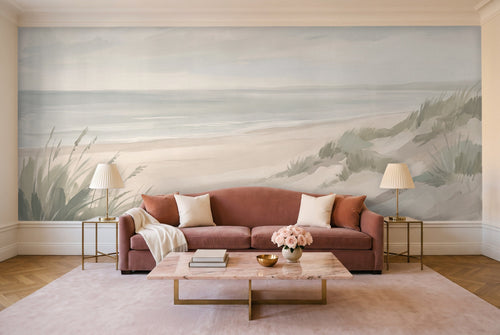
Komorebi, Pearl -
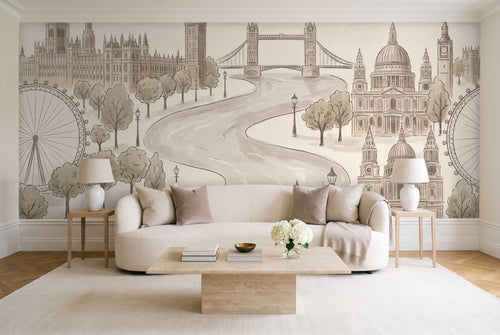
Cartographer, Slate -
Kinabalu, Fern -
Bramblewood, Linen -
Bramblewick, Oat -
Clover Ley, Linen -
Cream Dahlia Floral Mural -
Rosamaine, Rosehip -
Arborea, Heather -
Seaspray, Mist -
Kiri, Cornflower -
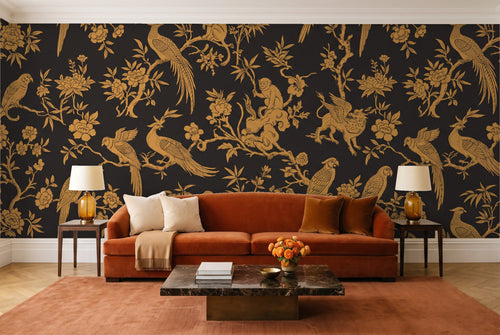
Cordovan, Claret -
Rushmere, Mist -
Ardesia, Ink -
Kinfolk, Linen -
Shoal, Posy -
Kasumi, Stone -
Carrara, Jade -
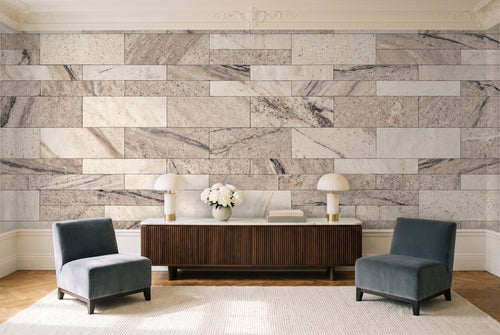
Pietrasanta, Linen -
Wolds, Honey -
Arlington, Heather -
Oakhanger, Linen -
Shere, Fern -
Firmament, Onyx


Our collection of paste the wall wallpaper offers a straightforward way to decorate your home with a large-scale mural. Each design is printed to the exact dimensions of your wall, ensuring a perfect fit with no complex calculations. From modern landscapes to classic floral patterns, you can find a style that suits your interior. Before committing to a full mural, you can check the colours and material by ordering a sample to see it in your own home first.
Choosing the Right Design for Your Space
The paste-the-wall method is suited to a wide array of designs, from large, continuous landscapes to detailed patterns. For a contemporary living room, a design like the Terracotta Mountain Landscape Mural creates a serene focal point. Because each mural is made to your wall's exact size, the scale of the design is always appropriate, whether it is an intricate floral or a broad, atmospheric scene.
Consider the room's existing colour palette. A mural with subtle clay or green tones can introduce warmth and connect with natural materials like wood and stone. For a bolder statement, a black floral design like the Black Peony Floral Mural provides dramatic contrast, especially in well-lit rooms. The simplified installation process of this paper type means even complex designs are manageable.
How to Prepare Your Wall for Installation
Proper wall preparation is key to a professional-looking result. This wallpaper is suitable for smooth or lightly textured interior walls. It is not designed for application on rough surfaces like brick or stucco. Before you begin, ensure the wall is clean, dry, and free of any dust or grease. Any holes or cracks should be filled and sanded smooth. This creates a uniform surface for the adhesive to bond with and makes future removal easier.
Accurate measurements are also a vital part of preparation. Using a tape measure, find the widest and tallest points of your wall. This extra material provides a margin for trimming at the ceiling, skirting boards, and corners, ensuring complete coverage even if your walls are not perfectly square. Our wall measuring calculator can help you confirm your figures before ordering.
The Paste The Wall Application Method
The primary advantage of paste the wall wallpaper is its direct application process. Unlike traditional papers, you apply the adhesive directly to the wall section by section, rather than soaking the paper. This reduces mess and saves time. You simply apply a suitable wallpaper paste to the wall for one panel at a time, then hang the dry panel, smoothing it into place.
This method offers more control during hanging, as the dry paper is lighter and less prone to stretching or tearing than wet paper. It allows for minor adjustments as you work. For a detailed walkthrough of the entire process, from mixing the paste to trimming the edges, we have prepared a comprehensive Wallpaper Installation: A Step by Step Professional Guide. Following these steps will help you achieve a seamless and durable finish for your new wall mural.
Paste The Wall Wallpaper: your questions
Is paste the wall wallpaper easy to hang?
Yes, many people find it easier than traditional wallpaper. You apply paste directly to the wall, not the paper, which is less messy and means you hang a dry, lighter panel.
What kind of paste do I need for this wallpaper?
You will need a standard, good-quality wallpaper adhesive suitable for non-woven papers. Always check the paste manufacturer's instructions before applying it to your wall to ensure compatibility and best results.
Can I use paste the wall wallpaper in a bathroom?
For rooms with moderate humidity like a well-ventilated bathroom, consider our Pre-Pasted or peel and stick wallpaper options instead.
How do I know how much wallpaper to order?
Our murals are printed to your exact wall dimensions. For help, use our wallpaper calculator.
Questions about Paste The Wall Wallpaper
Is the Non-Pasted paper the right choice for one big living room wall?
Usually yes, if you are happy to paste the wall yourself. Non-Pasted ($7.95 per square foot) is a smooth matte non-woven paper at 190 gsm, made for dry rooms such as living rooms and bedrooms, and it is the lowest price per square foot of the three. A calm panorama like Elmscott, Oat or Cotterstock, Sage suits a large wall. A sample on the real paper shows the finish first.
Which wallpaper paper already has paste on it, and which one needs paste?
Pre-Pasted ($8.95 per square foot) has paste on the back: you wet it and hang it. Peel and Stick ($10.95) is self-adhesive, so no paste at all. Non-Pasted ($7.95) is the one where you apply paste to the wall yourself. All three are available for every design, for example Umbria, Terracotta, so you can choose by how much work you want to do.
Can I use ready-mixed wallpaper paste for a non-pasted mural?
Generally yes, as long as the label says it is suitable for non-woven or paste-the-wall papers, which is what our Non-Pasted paper is (smooth matte non-woven, 190 gsm). Check the tub for the right wallpaper weight and coverage, and follow its instructions. We do not recommend specific brands, but the the Paste The Wall Wallpaper collection collection shows the designs that use this method, such as Calce, Oat. Murals are priced from $7.95 per square foot, with free shipping and duties included.
Can I make my own wallpaper paste at home?
We would not suggest it for a made-to-measure mural. A ready-made paste labelled for non-woven or paste-the-wall papers is more predictable, and a wall mural is expensive to get wrong. If you want no paste at all, choose Pre-Pasted ($8.95 per square foot) or Peel and Stick ($10.95). A sample lets you practise on a 30 x 20 in piece before committing.
How do I cut wallpaper around light switches and sockets?
Switch the power off at the breaker first, remove the cover plate, hang the panel over the opening, then make a small cut from the centre toward the corners and trim along the box with a sharp blade. Screw the plate back on once everything is dry. If you are unsure about the electrics, ask an electrician. Plain areas such as Pip, Pearl make switch cut-outs easy to hide. Murals are priced from $7.95 per square foot, with free shipping and duties included.
How do I make the joins between panels line up?
Casavono panels are straight-match, 76 cm (30 in) wide with pre-trimmed edges, so you butt each panel against the last with no overlap. There are joins between panels, and busy patterns hide them better than plain colours. Hang the first panel straight, and check each next panel against the one before. Hedgerow, Garden is a busy leaf pattern that keeps joins discreet. Murals are priced from $7.95 per square foot, with free shipping and duties included.
How long does it take to put up wallpaper on one wall?
There is no fixed time, because it depends on the wall size, the paper and how used to it you are. Allow time for wall preparation as well as hanging, and read the installation guide before you start. Peel and Stick can be repositioned for 24 hours after hanging, which can save time on mistakes. Landfall, Linen is a single-scene wall that goes up panel by panel. Murals are priced from $7.95 per square foot, with free shipping and duties included.
I have never wallpapered before, is hanging a mural too ambitious?
Many first-timers manage one wall, especially with Peel and Stick, which can be repositioned for 24 hours after hanging. The panels are 76 cm (30 in) wide and pre-trimmed, so you handle one at a time, and the installation guide takes you through it. A sample (Non-Pasted) lets you practise first. Start with a simple wall such as Billow, Pearl.