

The complete guide
Contemporary Accent Wall Ideas: The Renter Friendly Guide
Transform your rental home with damage-free style. This comprehensive guide explores contemporary accent wall ideas using removable peel and stick wallpaper, from choosing the right design to a flawless installation.

The short version
- Peel and stick wallpaper is the best option for renters wanting to create a temporary, damage-free accent wall.
- Success depends on proper wall preparation: the surface must be clean, dry, and smooth. Freshly painted walls need three to four weeks to cure.
- Made to measure murals offer a high-impact, custom-fit solution without the waste of standard wallpaper rolls.
- Installation is a straightforward DIY project involving cleaning the wall, marking a guideline, applying panels edge to edge, and trimming the excess.
- Removal is simple and clean when done correctly, typically by gently warming the surface and peeling slowly.
Creating a stylish, contemporary accent wall in a rental property is best achieved with removable peel and stick wallpaper. This self-adhesive solution allows you to introduce bold colour, texture, and pattern into your space without the need for paste or professional installers, and crucially, it can be removed without damaging the walls when you move out.
What is peel and stick wallpaper?
Peel and stick wallpaper is a decorative wall covering with a self-adhesive backing. Unlike traditional wallpapers that require paste, this type has a backing paper that you simply peel away to expose the adhesive, allowing you to stick it directly to the wall. It functions much like a large, high-quality sticker designed for interior walls.
The primary advantage is its temporary nature. The adhesive is formulated to be strong enough to stay in place, yet gentle enough to be removed without leaving residue or pulling off paint, provided the wall was properly prepared. At Casavono, our Peel & Stick paper is self-adhesive and repositionable. This means you can adjust its position during the first 24 hours of installation to get the alignment just right. It is also PVC-free and certified for peace of mind.
This makes it an ideal choice for renters, but also for homeowners who enjoy changing their decor frequently or wish to tackle a DIY project without the mess of traditional wallpapering methods. It is available in repeating patterns or as large-scale murals that cover an entire wall with a single, continuous image.
Why is peel and stick wallpaper best for renters?
Peel and stick wallpaper is the superior choice for renters because it offers maximum design impact with minimal commitment and risk. Rental agreements typically forbid permanent changes to the property, and peel and stick wallpaper is a completely reversible design choice. You can add a dramatic accent wall to a bedroom or living room, knowing you can remove it easily before your final inspection.
The application process is far less messy than alternatives. There is no need for water trays or paste brushes, which reduces the risk of spills and damage to floors or furnishings. This makes it a clean, contained project you can complete in an afternoon. Furthermore, because it is self-adhesive, it eliminates the need to purchase extra supplies like paste and rollers, simplifying the process.
When comparing wallpaper types, the benefits for temporary use become clear.
| Advantage | Drawback |
|---|---|
| Easy to remove. Ideal for temporary decoration without damaging walls or risking a security deposit when installed and removed correctly. | Less forgiving on texture. Requires a very smooth, well-prepared wall for the best adhesion and a clean, professional finish. |
| No paste required. A cleaner, quicker installation process with fewer tools and no drying time for paste or water. | Shorter-term solution. While durable, it is not designed to be as permanent as a high-quality, non-pasted wallpaper. |
| Repositionable. Minor mistakes during hanging can be corrected easily, making it more forgiving for first-time DIY installers. | Sensitive to environment. Extreme humidity or temperature fluctuations can affect the adhesive over time more than pasted options. |
While Pre-Pasted and Non-Pasted wallpapers offered by Casavono provide excellent durability, they are designed for more permanent applications. For anyone living in a temporary home, Peel & Stick offers the perfect balance of style, convenience, and compliance with rental rules. Explore our full collection of Peel and Stick Wallpaper designs to find your perfect match.
Murals made to your measure
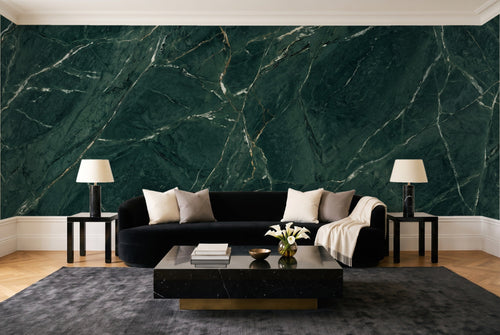
 Carrara, JadePrinted to your wall size
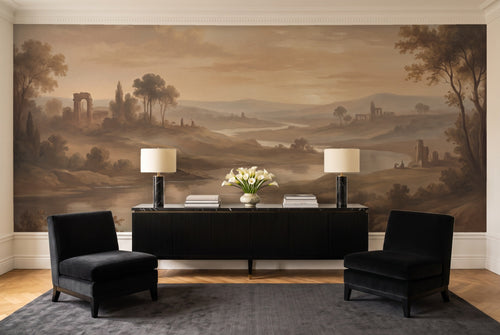
 Olivet, SlatePrinted to your wall size
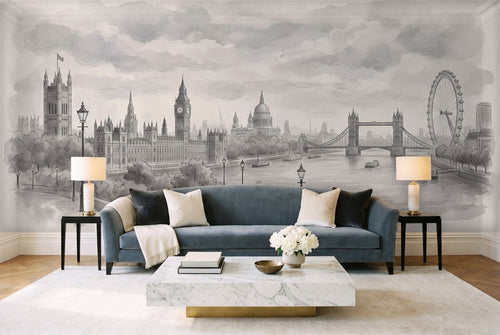
 Stillwater, MistPrinted to your wall size
How to use peel and stick wallpaper for an accent wall?
Using peel and stick wallpaper to create a contemporary accent wall is about strategic placement and thoughtful design choices. An accent wall should be the natural focal point of the room, typically the wall you see first when you enter, the wall behind your bed, or the wall behind your sofa.
First, select your wall. Avoid walls with too many doors or windows, as these can break up the design and complicate installation. The goal is to have a large, continuous canvas to showcase your chosen pattern or mural. Once you have chosen the wall, you must measure it accurately. For a Casavono made to measure mural, measure the wall at its widest and tallest points, including any doors or windows. Then, add about 4 inches (10 cm) to both the total width and height for bleed. This ensures your mural will cover the entire surface, and the excess is simply trimmed away after hanging for a perfect fit. Our free wallpaper calculator can help you determine the exact dimensions needed.
The beauty of a made to measure mural is that it is printed as one single image, perfectly scaled to your wall's size. This avoids the repeating patterns of standard wallpaper rolls, which can sometimes look busy or fail to create a cohesive focal point. A single, large-scale image, like a landscape or abstract design, provides a much more modern and impactful statement.
How to do peel and stick wallpaper installation?
A successful peel and stick wallpaper installation relies on patience and a methodical approach. While it is simpler than traditional wallpapering, following the correct steps is key to a bubble-free, professional-looking finish. Here is a guide on how to do peel and stick wallpaper application.
- Wall Preparation: This is the most critical step. The wall must be completely smooth, clean, and dry. Fill and sand any holes or imperfections. Wipe the wall down with a damp sponge to remove any dust or grime and allow it to dry completely. If the wall has been recently painted, you must wait at least three to four weeks for the paint to fully cure. For more details, read our guide on how to prepare a wall for wallpaper.
- Gather Your Tools: You will need a tape measure, a pencil, a spirit level, a sharp utility knife with fresh blades, and a smoothing tool or squeegee. A step ladder will be necessary for reaching the top of the wall.
- Mark Your Guideline: Do not rely on the corner of the wall or the ceiling being perfectly straight. Measure the width of your first wallpaper panel from the corner (Casavono panels are 30 inches or 76 cm wide) and use a spirit level to draw a faint, perfectly vertical pencil line. This will be your guide for hanging the first panel straight.
- Apply the First Panel: Starting at the top, peel back about 12 inches (30 cm) of the backing paper. Align the edge of the wallpaper with your pencil guideline and press it onto the wall, leaving a couple of inches of excess at the top to be trimmed later.
- Smooth and Continue: Working from the centre outwards, use your smoothing tool to press the wallpaper onto the wall, pushing out any air bubbles as you go. Slowly pull down the backing paper in stages, continuing to smooth the wallpaper as you move down the wall.
- Align Subsequent Panels: Casavono murals are delivered in numbered panels that are hung edge to edge with no overlap. Take your next panel and align its pattern with the one already on the wall. The panels should meet perfectly without a gap. Repeat the application process.
- Trim the Excess: Once all panels are hung, use your sharp utility knife and a straight edge to carefully trim the excess wallpaper at the ceiling, skirting boards, and corners.
What are some contemporary living room wallpaper ideas?
Contemporary living room wallpaper ideas often focus on creating a sophisticated focal point that reflects personal style without overwhelming the space. An accent wall is the perfect canvas for this. The key is to choose a design that complements your existing furniture and decor, whether through colour, theme, or texture.
One popular trend is bringing the outdoors in with biophilic designs. A quiet botanical mural, such as the graceful pattern of *Olivet, Slate*, can introduce a sense of organic calm. This works particularly well in neutral or minimalist spaces, adding a touch of nature's complexity. You can find similar styles in our Greenery Wallpaper collection.
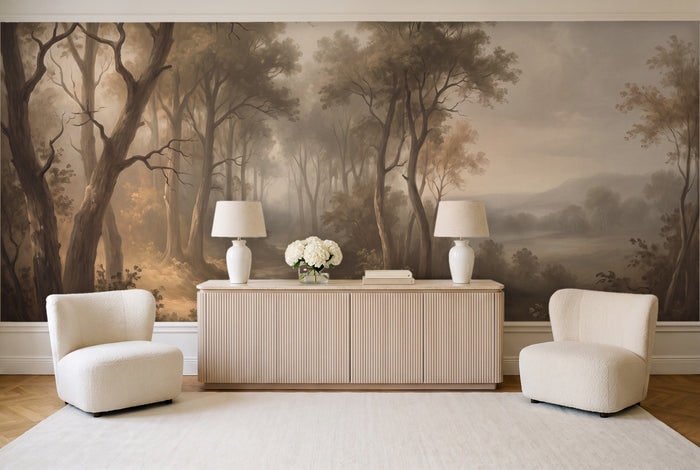
Abstract landscapes are another powerful choice for a modern feel. They create depth and atmosphere, making a room feel larger and more serene. A hazy, atmospheric forest scene like *Stillwater, Mist* can transport you, while a soft, ethereal cloudscape like *Evensong, Linen* adds a dreamy quality. These murals act as a large-scale piece of art. For more inspiration, browse our Landscape Wallpaper range.
For a touch of understated luxury, consider designs that mimic natural materials. A mural depicting the dramatic veining of marble, like *Carrara, Jade*, adds a high-end, polished look without the permanence of real stone. It provides visual texture and a sense of opulence that is central to many contemporary aesthetics.
Finally, warm minimalism is a growing trend that favours earthy tones and simple, impactful forms. A gentle countryside view such as *Elmscott, Oat* or an abstract sunset like *Emberley, Terracotta* can add immense warmth and character to a room without introducing clutter. These designs create a cosy, inviting atmosphere that feels both modern and timeless. Discover more subtle designs in our Minimalist Wallpaper collection.
Ready to create your own accent wall?
Explore hundreds of removable, made to measure designs perfect for any rental.
How do you choose the right design?
Choosing the right design for your accent wall involves balancing personal taste with the characteristics of your room. The scale of the pattern, the colour palette, and the overall mood you want to create are all important factors. The first step is to consider the size of your room and the wall you will be covering.
Large-scale patterns and murals, like those from Casavono, are often better for accent walls than small, busy, repeating patterns. A single, large image can make a room feel bigger and more open, acting as a window to another world. A small, repetitive pattern can sometimes feel cluttered and close in the space. Consider how the scale of the design elements will relate to your furniture. A mural with large, sweeping botanicals or a vast landscape can make a dramatic backdrop for a sofa or bed.
The colour palette is also crucial. Your accent wall should connect with the rest of your room's decor. You can either pick a design that incorporates colours already present in your textiles, art, or furniture, or choose a mural that introduces a new, complementary accent colour. For example, if your living room has grey sofas and blue cushions, a mural like *Olivet, Slate* with its blue and grey tones would create a cohesive look. You can explore options in our Blue and Grey Wallpaper collection.
Before committing, it is always wise to order a sample. A sample allows you to see the design's true colours, texture, and scale in your own home's lighting, which can look very different from a screen. Casavono offers generous 30 x 20 inch (76 x 50 cm) samples of any design, so you can tape it to the wall and live with it for a few days before making a final decision.
How to prepare your wall for removable wallpaper?
Proper wall preparation is the foundation of a successful and truly damage-free wallpaper experience. The adhesive on peel and stick wallpaper is designed to stick to a smooth, clean surface. Applying it to a poorly prepared wall can lead to poor adhesion, bubbling, and potential damage upon removal.
First, inspect the wall for any imperfections. Fill any cracks, holes from nails, or dents with a suitable filler. Once the filler is dry, sand it down until it is perfectly smooth and flush with the rest of the wall. Any texture, however minor, can show through the wallpaper and may prevent the adhesive from making full contact. If your walls have a significant texture, like an orange peel or knockdown finish, peel and stick wallpaper is not recommended as it will not adhere properly.
Next, the wall must be thoroughly cleaned. Over time, walls accumulate a thin layer of dust, grease, and grime. Use a sponge with a mild soap and water solution to wash the entire surface. For tougher grime, especially in kitchens, a degreasing cleaner may be necessary. After washing, rinse the wall with a clean, damp sponge to remove any soap residue and let it air dry completely for at least 24 hours.
Fresh Paint Warning. Applying peel and stick wallpaper to paint that has not fully cured can cause the adhesive to bond with the paint, leading to damage upon removal. Always wait at least three to four weeks for the paint to cure fully before applying any wall covering.
Finally, remove any obstacles like light switch plates, electrical outlet covers, and vents. This will allow you to apply the wallpaper smoothly over these areas and then trim the openings for a clean, professional finish. For a deep dive into this topic, see our full guide on wallpaper installation.
Can you reuse peel and stick wallpaper?
This is a common question, and the answer requires a slight distinction between 'repositionable' and 'reusable'. Peel and stick wallpaper is designed to be repositionable during the initial installation process. If you apply a panel and realise it is crooked, you can gently peel it off the wall and reapply it. Casavono's Peel & Stick paper, for instance, allows for repositioning for up to 24 hours after the first application.
However, it is not designed to be truly reusable in the long term. Once the wallpaper has been on a wall for an extended period, the adhesive cures and forms a stronger bond. When you eventually remove it, the adhesive's tackiness will be significantly reduced. It may also stretch or be damaged during the removal process, making it very difficult to rehang smoothly in a new location.
Furthermore, any dust or debris that sticks to the adhesive backing during removal will prevent it from sticking properly to another wall. While it might be technically possible to move a small, carefully removed piece to a new spot for a very short time, you should not expect to be able to wallpaper a room, remove it later, and rehang it in your next home. For this reason, it is best to think of peel and stick wallpaper as a single-use product for one specific location.
What is the best affordable peel and stick wallpaper?
When searching for the best affordable peel and stick wallpaper, it is important to think about value rather than just the initial price tag. The cheapest option is not always the most affordable in the long run. Quality plays a huge role in the ease of installation, the final appearance, and whether the product will damage your walls upon removal, which could lead to costly repairs and the loss of a security deposit.
A key factor in affordability is avoiding waste. With standard wallpaper rolls, you often have to buy more than you need to account for pattern matching, which can result in a lot of leftover material. A made to measure mural from Casavono is printed to your exact wall dimensions. This means you receive exactly what you need for your wall, with no wasted paper. This custom-fit approach avoids the material surplus common when buying multiple rolls of a repeating pattern for a single accent wall.
Material quality is another critical element. Lower-cost wallpapers are often made from thin vinyl that can stretch, tear, or shrink after application, leading to gaps between panels. They may also use weaker adhesives that fail over time or, conversely, aggressive adhesives that damage the paint and drywall underneath. Investing in a high-quality, PVC-free paper ensures a better result and protects your walls. Our guide on how to find the best peel and stick wallpaper offers more insight into judging material quality.
Ultimately, the best choice in wallpaper is one that fits perfectly, is easy to install, looks beautiful, and removes cleanly. A made to measure product provides this value by eliminating waste and reducing the risk of costly damage.
How do you remove peel and stick wallpaper without damage?
Removing peel and stick wallpaper is generally a simple process, but taking a careful and patient approach is the key to ensuring your walls remain in perfect condition. Rushing the process can cause the wallpaper to tear or pull paint from the wall. Follow these steps for a clean removal.
- Apply Gentle Heat: The adhesive can be softened with gentle heat. Use a hairdryer on a low to medium setting and hold it about 8 inches (20 cm) away from the wallpaper. Work in small sections, moving the hairdryer back and forth over the area for about 30 seconds to warm up and loosen the glue.
- Start at a Corner: Begin at a top corner of a wallpaper panel. Use your fingernail or a plastic scraper to gently lift the edge of the wallpaper away from the wall.
- Peel Slowly and Steadily: Once you have a good grip on the corner, begin to pull the wallpaper down towards the floor. The crucial technique is to pull at a 45-degree angle, keeping the wallpaper as parallel to the wall as possible. Do not pull it straight out towards you, as this creates tension and increases the likelihood of pulling off paint.
- Maintain a Consistent Pace: Pull with slow, steady pressure. If you encounter a stubborn spot, apply a little more heat with the hairdryer before continuing to peel. The entire panel should come off in one piece if you are careful.
- Clean Any Residue: High-quality peel and stick wallpaper should not leave much, if any, residue. If you do find some sticky spots, they can usually be removed easily by wiping the area with a damp sponge and a small amount of mild soap. Avoid using harsh chemical cleaners.
By following this method, you can restore your wall to its original state, ready for a new design or for your move-out inspection.
More murals to consider
 Evensong, LinenPrinted to your wall size
 Elmscott, OatPrinted to your wall size
 Emberley, TerracottaPrinted to your wall size
Common questions
Can I put peel and stick wallpaper in a bathroom?
Yes, you can use peel and stick wallpaper in a bathroom, but it should not be placed in areas with direct water contact, like inside a shower. For areas with high humidity, such as a bathroom with a shower, a Pre-Pasted paper is often a more durable choice as it is designed to handle everyday moisture.
How long does peel and stick wallpaper last?
The durability of peel and stick wallpaper depends on several factors. For best results, it must be applied to a properly prepared wall in a suitable environment. Its performance can be affected by wall condition, humidity levels, and exposure to direct sunlight.
Will peel and stick wallpaper stick to textured walls?
No, peel and stick wallpaper requires a smooth surface for proper adhesion. It will not stick well to textured walls like those with an orange peel or knockdown finish. Any texture will show through the paper and create air pockets, causing it to peel or bubble over time. The wall should be sanded smooth before application.
Do I need to overlap peel and stick wallpaper?
This depends on the manufacturer. Some brands require a small overlap to account for shrinkage. However, Casavono murals are designed to be hung edge to edge with no overlap. The panels are printed to align perfectly, creating a single, continuous image. Always check the specific instructions for the product you are using.
How do I calculate how much wallpaper I need?
For a made to measure mural, you measure the full height and width of your wall at its tallest and widest points. Then, add about 4 inches (10 cm) to each measurement for trimming. Casavono provides a free online wallpaper calculator that determines the exact size and panel layout for your specific wall dimensions.
Can I put peel and stick over existing wallpaper?
It is not recommended to apply peel and stick wallpaper over existing wallpaper. The surface may not be smooth enough, and the adhesive may not bond properly to the old paper. Additionally, the weight of the new layer could cause the old wallpaper to peel away from the wall. Always remove old wallpaper first.
Made to your measure
Peel and Stick Wallpaper
Before you order