
Wallpaper Basics
Types of Wallpaper: A Complete Buyer's Guide to Materials
Choosing the right wallpaper can feel complex. This guide breaks down the different types of wallpaper by material and application method to help you find the perfect fit for any room.

The short version
- Wallpaper types are defined by their material and application method, such as Non-Pasted, Pre-Pasted, and Peel & Stick.
- Non-Pasted paper is a durable, classic choice applied with wallpaper paste, ideal for high-traffic areas.
- Pre-Pasted paper has a water-activated adhesive and is a great option for rooms with everyday humidity like kitchens and bathrooms.
- Peel & Stick wallpaper is self-adhesive, repositionable, and renter-friendly, making it the easiest type to install and remove.
- Proper wall preparation, including cleaning, smoothing, and priming, is essential for a professional finish regardless of the wallpaper type.
The main types of wallpaper are defined by their application method: Non-Pasted (traditional), Pre-Pasted (water-activated), and Peel & Stick (self-adhesive). Each type has a distinct installation process and is suited to different rooms and skill levels, from durable, classic finishes to easy, renter-friendly options.
What are the different types of wallpaper?
Understanding the different types of wallpaper is the first step in any decorating project. The primary distinction lies in the application method, which determines the tools you will need and the permanence of the installation. Each has its own set of advantages.
At Casavono, all our made to measure murals are available on three certified, PVC-free papers, allowing you to choose the best application method for your space and confidence level. This ensures you can have any design you love on a paper that works for you.
Here is a breakdown of the three main application types you will encounter:
| Paper Type | Best For | Application | Durability |
|---|---|---|---|
| Non-Pasted | Living rooms, bedrooms, and high-traffic areas where longevity is key. | Requires wallpaper paste to be applied to the wall before hanging each panel. | Most durable. Offers a strong, long-lasting bond with a classic smooth matte finish. |
| Pre-Pasted | Kitchens and bathrooms with everyday humidity, or for DIYers seeking a simpler process. | The adhesive is pre-applied and activated by soaking or spraying the back with water. | Highly durable. Features a textured matte finish that performs well in humid environments. |
| Peel & Stick | Renters, feature walls, nurseries, and anyone wanting a low-commitment, easy-to-change option. | A self-adhesive backing that you peel and apply directly to the wall, like a large sticker. | Good durability. It is repositionable for up to 24 hours and can be removed without damaging most walls. |
How to choose wallpaper for a living room?
To choose wallpaper for a living room, consider the room's function, natural light, and existing decor. A living room is a versatile space, so the wallpaper can set a tone, whether it is calm and relaxing or bold and sociable. Look for a design that complements your furniture and reflects your personal style.
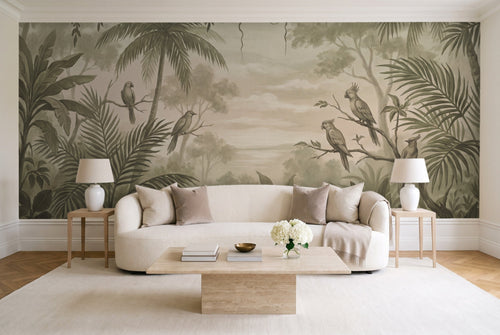
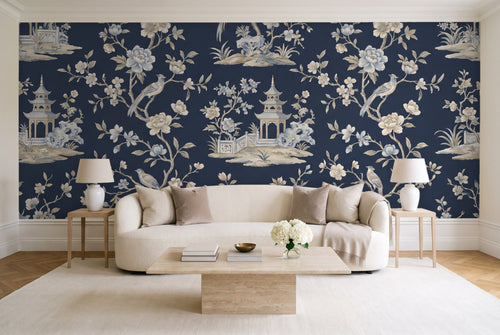
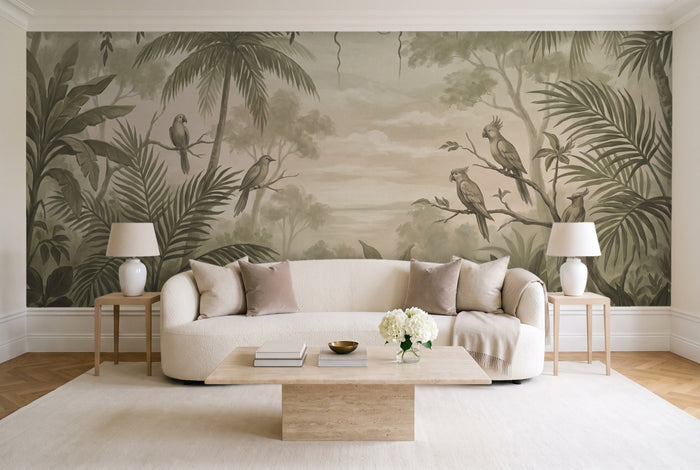
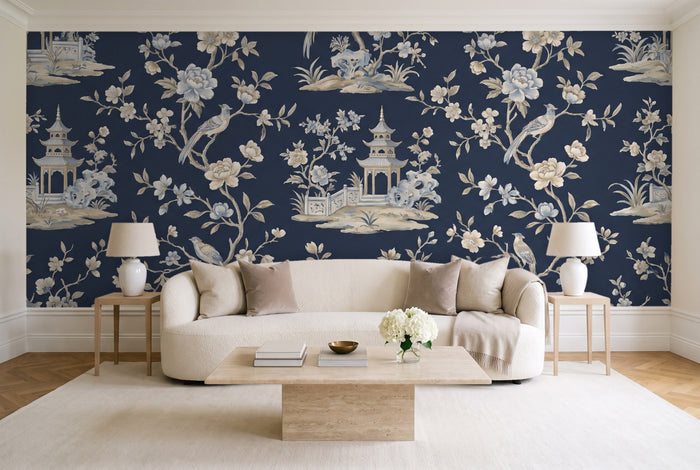
For a serene and inviting atmosphere, consider a quiet botanical such as the Cotterstock, Sage mural, which brings a gentle touch of nature indoors. If you prefer a more dramatic and sophisticated look, a deep, intricate design like the Kinmont, Midnight mural can create a stunning focal point.
Scale is another important factor. On a large, uninterrupted wall, a repeating pattern can sometimes look busy or fail to align perfectly. This is where a made to measure mural is a better answer. Because a mural is a single image printed to your wall’s exact dimensions, it provides a cohesive, impactful design without any awkward pattern repeats. Explore our curated living room wall murals for more ideas.
Murals made to your measure
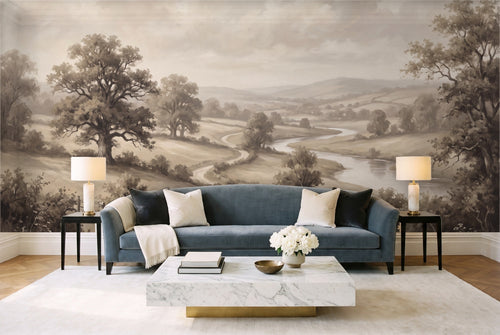
 Montmartre, StonePrinted to your wall size
 Stillwater, MistPrinted to your wall size
 Kinmont, MidnightPrinted to your wall size
Which wallpaper is best for kitchens and bathrooms?
The best wallpaper for kitchens and bathrooms is one that can withstand higher levels of humidity and is easy to clean. While no wallpaper is fully waterproof, certain materials perform much better than others in these environments. Avoid papers that are highly absorbent or have delicate textures.
Casavono's Pre-Pasted wallpaper is an excellent choice for these spaces. The paper has a textured matte finish and the water-activated adhesive creates a secure bond that holds up well against the everyday humidity from cooking and showering. It can be gently wiped with a damp cloth to clean away splashes.
When wallpapering a bathroom, it is best to avoid direct contact with water. Do not apply it inside a shower enclosure or directly behind a sink where it will be frequently splashed. A well-ventilated room is key to ensuring the longevity of your bathroom wallpaper.
What is the easiest wallpaper to install?
Peel & Stick is widely considered the easiest wallpaper to install, especially for beginners. Its self-adhesive backing eliminates the need for paste or water, making the process cleaner and faster. Because it is repositionable for a short time, you can adjust the placement if you make a mistake.
While the concept is simple, a successful installation for any wallpaper type depends on careful preparation and following instructions. A made to measure mural from Casavono simplifies the process further, as the panels are delivered numbered and rolled in hanging order. You hang them from left to right without any overlap.
Here is a simplified comparison of the installation steps:
- Peel & Stick: Prepare the wall. Peel about 30 cm (12 inches) of the backing from the first panel. Align it at the top of the wall and smooth it down, gradually peeling away more backing as you work your way down.
- Pre-Pasted: Prepare the wall. Activate the adhesive on the back of the first panel with a water tray or sponge. 'Book' the panel (fold it pasted-side to pasted-side) for a few minutes. Unfold and hang.
- Non-Pasted: Prepare the wall. Apply an even layer of wallpaper paste directly to the section of the wall where your first panel will go. Hang the dry panel onto the pasted wall and smooth it into place.
For detailed instructions, refer to our official step by step installation guide. You can also browse our full collection of Peel and Stick Wallpaper designs.
Ready to measure your wall?
Get an instant calculation of the panels you need for your wall.
Can you wallpaper over tiles?
Yes, you can wallpaper over tiles, but it requires thorough preparation to create a smooth, suitable surface. Applying wallpaper directly onto a tiled surface will result in every grout line showing through, creating an uneven and unprofessional finish. The key is to completely flatten the wall first.
The goal is to create a surface that is as smooth as a plastered wall. This involves filling the grout lines and levelling the entire area. It is a labour-intensive process, but it is essential for a good result. If you are not confident, consulting a professional decorator is recommended.
Follow these general steps:
- Clean the tiles thoroughly. Use a strong degreasing cleaner to remove any soap scum, grease, or grime. Allow the surface to dry completely.
- Scuff the tile surface. Lightly sand the glossy surface of the tiles with medium-grit sandpaper to help the filler and primer adhere.
- Fill the grout lines. Apply a flexible filler or tile skim coat over the entire tiled area, using a trowel to create a perfectly flat surface. You may need two or three coats to fully hide the grout lines.
- Sand until smooth. Once the filler is completely dry, sand the entire wall until it is perfectly smooth to the touch.
- Prime the wall. Apply a high-quality, adhesion-promoting primer. This creates a uniform surface for the wallpaper adhesive to bond with.
Once primed and dry, your previously tiled wall is ready for wallpaper. For more tips on surface readiness, see our guide on how to prepare a wall for wallpaper.
Can you wallpaper over paneling?
Yes, you can wallpaper over wood paneling, but just like with tiles, extensive preparation is required to achieve a smooth finish. Paneling, or panelling, often has grooves or bevelled edges between the boards that will show through the wallpaper if not properly addressed.
The objective is to create a flat, non-absorbent surface. Wood is porous and can absorb moisture from wallpaper paste, causing the wallpaper to fail over time. It can also contain tannins that may bleed through and stain light-coloured papers. Proper sealing and priming are non-negotiable.
Here is the process:
1. Clean and Sand the Paneling
Start by cleaning the paneling with a sugar soap solution to remove any dust, grease, or polish. Once dry, lightly sand the entire surface to remove any glossy varnish and create a key for the filler and primer to stick to.
2. Fill the Grooves
Using a flexible wood filler and a putty knife, fill all the grooves, knots, and any imperfections in the wood. Overfill slightly to account for shrinkage as it dries. For deep grooves, you may need to apply the filler in two or more layers, allowing it to dry between applications.
3. Sand and Prime
After the filler has fully cured, sand the filled areas until they are perfectly flush with the paneling surface. The goal is a wall that feels completely smooth. Then, apply a stain-blocking primer over the entire wall. This prevents wood tannins from bleeding through and ensures the wallpaper adhesive bonds correctly. If you are wallpapering over painted paneling, our guide on wallpapering over paint has additional tips.
Always order a sample. Before committing to a full mural, order a sample. This allows you to see the colours in your home's lighting and feel the texture of the paper. You can also test it on a small, prepared area of your wall to ensure good adhesion.
What is the difference between wallpaper and a wall mural?
The main difference between wallpaper and a wall mural is the design. Traditional wallpaper features a repeating pattern, where the design is duplicated on each roll to create a continuous look. A wall mural, on the other hand, is a single, large-scale image that spans your entire wall, like a piece of art.
With repeating pattern wallpaper, you often have to purchase extra rolls to account for pattern matching, which can lead to waste. Aligning the pattern from one strip to the next requires precision and can be challenging. A scenic landscape or a delicate floral design may be interrupted by the pattern repeat.
A made to measure mural is the superior choice for creating a seamless, high-impact feature wall. Casavono prints one continuous image, such as the serene Stillwater, Mist, to the exact width and height of your wall. It arrives in numbered panels that are hung edge-to-edge with no overlap, making installation straightforward and ensuring the final image is flawless. Explore our complete collection of wall murals to see the possibilities.
More murals to consider
 Cotterstock, SagePrinted to your wall size
 Wetherby, LinenPrinted to your wall size
 Alpenglow, TerracottaPrinted to your wall size
Common questions
What is the most durable type of wallpaper?
Non-Pasted wallpaper, when applied correctly with a quality paste, generally forms the strongest and most durable bond with the wall. This makes it an excellent choice for high-traffic areas like hallways, living rooms, and commercial spaces where longevity is a priority.
Is removable wallpaper really removable?
Yes, removable wallpaper like Peel & Stick is designed to be taken down without damaging the wall surface beneath. For best results, the wall should be properly prepared and primed before installation. Removal is easiest when done slowly, pulling the panel away from the wall at a 45-degree angle.
Do I need to prime my walls before wallpapering?
Priming is almost always recommended. A wallpaper-specific primer, often called a 'size', creates a uniform, sealed surface. This prevents the paste from soaking into the drywall and ensures the paper adheres properly. It also makes removal much easier in the future, as the wallpaper will strip off the primer layer, not the wall itself.
Can I wallpaper a room with high humidity?
Yes, but you must choose the right type of paper. A Pre-Pasted paper is specifically designed to handle everyday humidity found in kitchens and bathrooms. Ensure the room has good ventilation to allow moisture to escape, which helps preserve the wallpaper's adhesion and finish over time.
How much extra wallpaper should I buy?
For traditional repeating-pattern wallpaper, you typically need to buy extra material to account for waste from pattern matching. With a made to measure mural from Casavono, there is no pattern matching. You simply measure your wall's widest and tallest points and add about 4 inches (10 cm) to both for trimming.
What is the difference between paste-the-wall and paste-the-paper?
Paste-the-wall wallpaper (like Casavono's Non-Pasted option) is generally easier to hang. You apply paste directly to the wall and hang the dry paper on top. With paste-the-paper, you apply paste to the back of the wallpaper, let it soak ('book'), and then hang the pasted sheet, which can be messier.
Made to your measure
Murals for the wall you have in mind


Before you order