
Care & Removal
How Do I Take Wallpaper Off the Wall? A Practical Guide
Removing old wallpaper can feel daunting, but with the right tools and techniques, it's a manageable task. Our guide walks you through every step for a clean, professional finish.

The short version
- Identify your wallpaper type to choose the right removal method; modern papers are often easier to remove than older ones.
- Gather essential tools before you start, including a scoring tool, scraper, spray bottle, and protective coverings for your room.
- Thoroughly soak the wallpaper with a removal solution, allowing it time to penetrate and loosen the adhesive.
- Work in small, manageable sections, scraping gently from the top down to avoid damaging the wall surface underneath.
- After removal, wash the walls to remove all residual adhesive, then repair any imperfections before priming for a new finish.
To take wallpaper off the wall, you must first protect your room, then identify the paper type. For most traditional papers, the process involves perforating the surface with a scoring tool, soaking it with a water-based solution to dissolve the adhesive, and then carefully scraping the softened paper and backing from the wall.
What tools do I need to remove wallpaper?
Having the right tools is the first step towards a clean and efficient removal process. Many of these items are standard for home improvement projects and are also part of the toolkit for preparing a wall for new wallpaper. A complete set of tools prevents interruptions and protects your home.
Your essential toolkit should include:
- Protective Gear: Dust sheets or plastic sheeting for floors and furniture, painter's tape, and gloves.
- Scoring Tool: A device with small rotating wheels that creates tiny holes in the wallpaper, allowing your removal solution to penetrate.
- Putty Knife or Scraper: A flexible, wide-bladed tool is best to get under the paper without gouging the wall.
- Spray Bottle or Garden Sprayer: For applying your removal solution evenly across the wall.
- Solution Ingredients: Depending on your chosen method, this could be warm water, distilled white vinegar, or a commercial wallpaper stripper.
- Sponges and Buckets: One bucket for your removal solution and another for clean water to wash the walls afterwards.
- Ladder or Step Stool: To safely reach the top of the walls.
- Bin Bags: For easy disposal of the old, sticky wallpaper scraps.
Gathering everything before you begin makes the entire job smoother. The goal is to remove the paper, not to damage the wall surface, which is a critical first step before considering a new look with fresh wallpaper murals.
How do I prepare a room for wallpaper removal?
Proper preparation is not just about cleanliness; it's about safety and efficiency. Wallpaper removal involves a lot of water and sticky debris, so protecting your surroundings is essential. A well-prepared room makes the cleanup process significantly easier and protects your home from accidental damage.
Follow these steps to prepare your space:
- Clear the Room: Remove as much furniture as possible. For large items that cannot be moved, group them in the centre of the room and cover them completely with plastic sheeting.
- Protect the Floor: Cover the entire floor with thick plastic sheeting or canvas dust sheets. Tape the edges to the skirting boards to create a waterproof barrier that will catch water and falling wallpaper.
- Turn Off the Power: Turn off the electricity to the room at the circuit breaker. This is a critical safety step, as you will be working with water near outlets and switches.
- Protect Electricals: Cover all electrical outlets and light switches with painter's tape to prevent any water from getting inside.
- Remove Fixtures: Take down any wall hangings, curtains, and light fixture covers. This gives you unobstructed access to the entire wall surface.
Murals made to your measure
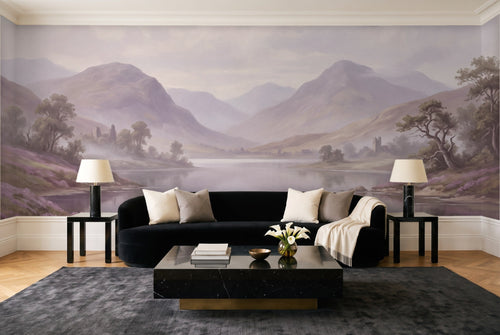
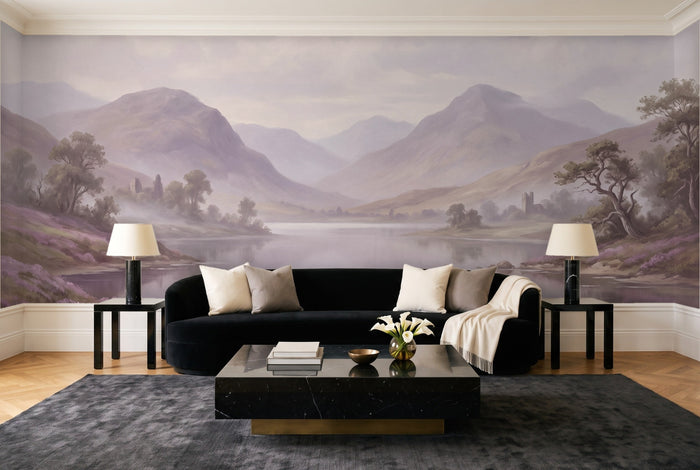
 Southwark, StonePrinted to your wall size
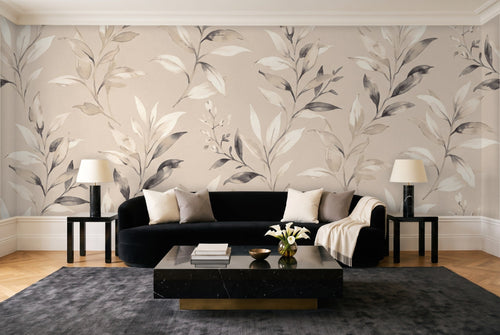
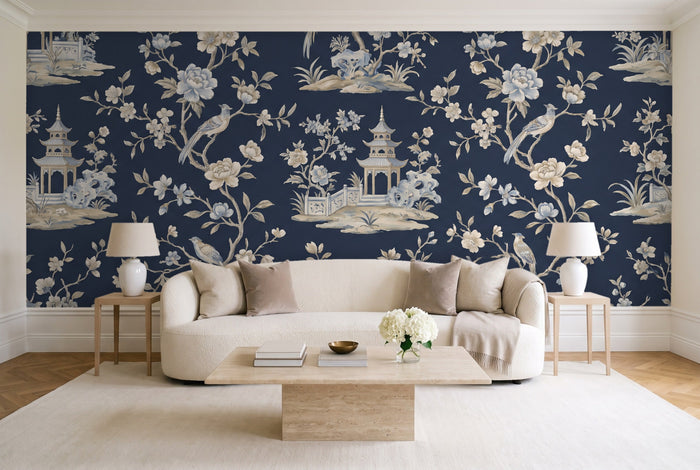
 Alexandrine, OnyxPrinted to your wall size
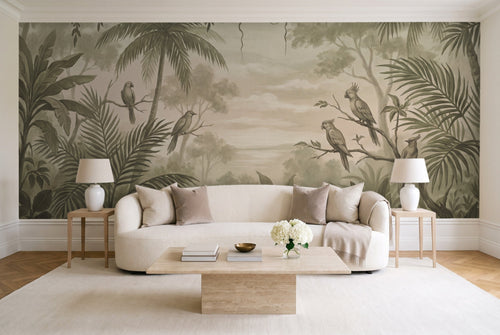
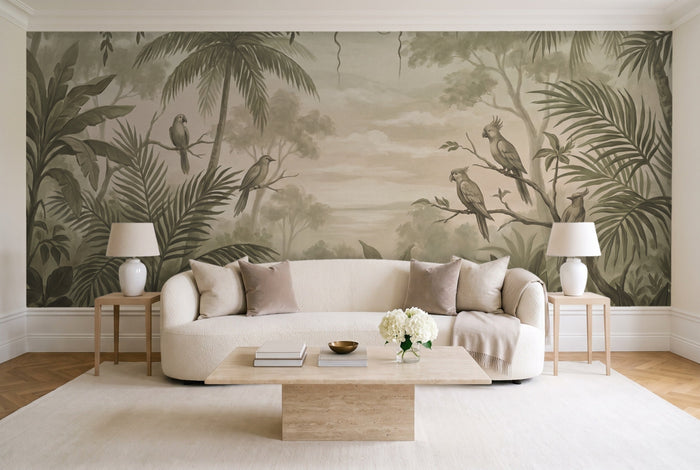
 Arrochar, MossPrinted to your wall size
How do you get old wallpaper off that is hard to remove?
Getting old wallpaper off, especially paper that has been on the walls for decades, requires patience and the right technique. The key is to dissolve the stubborn, aged adhesive. This is almost always achieved by perforating the surface and allowing a solution to soak through to the glue.
Step 1: Score the Wallpaper
Using a wallpaper scoring tool, move it over the wall in circular motions with light pressure. The goal is to create thousands of tiny holes in the paper's surface. This step is crucial for non-porous or painted-over wallpapers, as it allows the removal solution to bypass the waterproof surface and reach the adhesive beneath.
Step 2: Apply a Removal Solution
Once the wall is scored, it's time to soak it. Working in a manageable section, about 1 metre (3 feet) wide, apply your chosen removal solution generously with a spray bottle or sponge. Let the solution sit for at least 15 to 20 minutes to give it time to fully penetrate and soften the old paste. You may need to reapply it to keep the section wet.
| Solution Type | Pros | Cons |
|---|---|---|
| Warm Water | Cost-effective. It is free, readily available, and contains no chemicals, making it safe for any room. | Less powerful. It may not be effective on very old or strong adhesives without multiple applications. |
| Water & Vinegar | More effective. The acetic acid in vinegar helps to dissolve stubborn paste more quickly than water alone. | Strong odour. The smell of vinegar can be overpowering, so good ventilation is essential during use. |
| Chemical Stripper | Most powerful. Formulated specifically to break down strong wallpaper adhesives quickly and efficiently. | Harsh chemicals. It requires good ventilation, gloves, and careful handling due to its chemical content. |
Step 3: Scrape and Peel
After the wallpaper is thoroughly soaked, find a loose edge or seam and begin to scrape. Hold your putty knife at a low angle to the wall to avoid digging into the plasterboard. The paper should come off in sheets, but with very old paper, you may find it comes off in small pieces. Continue to soak and scrape section by section until the wall is clear.
Safety First. Before you begin soaking the walls, double-check that the electricity to the room is switched off at the breaker. Water and electricity are a dangerous combination.
What is the easiest way to remove strippable wallpaper?
Modern wallpapers are often designed for easier removal than their older counterparts. Strippable wallpaper is designed to be removed dry, without the need for extensive soaking or scoring. This makes updating a room a much simpler project.
To remove strippable wallpaper, start at a corner or seam near the top of a panel. Use a putty knife to carefully lift the edge of the paper. Once you have a good grip, pull the sheet downwards at a 30 to 45-degree angle.
A slow, steady pull is more effective than a quick yank, as it is less likely to tear the paper or damage the wall surface. Most strippable papers will come off in a full or large sheet, leaving the wall largely intact.
For renters. Casavono’s Peel & Stick wallpaper is specifically designed for simple removal. As a self-adhesive product, it can be peeled off the wall cleanly, making it an ideal choice for renters or anyone who enjoys changing their decor frequently without the commitment of traditional wallpaper paste.
Ready for a Fresh Start?
Discover a world of design possibilities with made-to-measure wall murals.
How do you take off old wallpaper that is painted over?
Removing wallpaper that has been painted over presents a unique challenge. The layer of paint creates a waterproof barrier, preventing any removal solution from reaching the adhesive underneath. The secret to success is to break through this paint layer thoroughly before you begin soaking.
You must be more aggressive with your scoring tool than you would be on unpainted paper. Go over the entire surface multiple times to ensure you have created enough perforations for the water to penetrate.
You will need to apply your chosen removal solution generously and give it extra time to soak in, potentially 30 minutes or more per section. You may even need to apply the solution two or three times to keep the area saturated.
Once soaked, the removal process is the same: scrape gently and work in small sections. Be aware that this is often a slower, more labour-intensive process. It is a prime example of why we advise against shortcuts; for more details, see our guide on whether you can paint over wallpaper.
How do you get a wall border off without damaging the wall?
Getting a wall border off follows the exact same principles as removing a full wall of paper, just on a smaller scale. Borders can sometimes be more stubborn as they often use a stronger adhesive to ensure the edges do not peel away over time. The key is to focus your efforts only on the border area.
To strip a wallpaper border:
- Test a corner first. Try to peel it off dry. If it is a modern, strippable border, it may come away easily.
- Score and soak if needed. If it doesn't peel off dry, use your scoring tool along the length of the border, then apply a removal solution with a sponge or spray bottle, being careful not to oversaturate the surrounding wall.
- Give it time. Let the solution work for about 15 minutes before gently scraping with a putty knife.
- Clean the residue. Once the border is removed, wash the area with a sponge and clean water to remove any remaining adhesive before painting or applying a new wall treatment. A clean surface is essential for any new decoration, whether paint or a striking new feature like the Alexandrine, Onyx mural.
What should I do after removing the wallpaper?
The job isn't finished once the paper is off the wall. The final steps are crucial for achieving a professional finish for whatever comes next, be it a coat of paint or a new, beautifully designed wall mural. A pristine surface is the foundation of a great result.
First, you must remove all remaining adhesive. Mix a solution of warm water and a small amount of washing-up liquid. Use a sponge to scrub the walls, working from top to bottom.
Rinse the sponge frequently in a separate bucket of clean water. You will know the glue is gone when the wall is no longer slimy or sticky to the touch. Let the walls dry completely for at least 24 hours.
Once dry, inspect the walls for any damage. Fill any nicks, holes, or gouges with a suitable filler, then sand it smooth once it has cured. A perfectly smooth wall is non-negotiable for a high-quality finish.
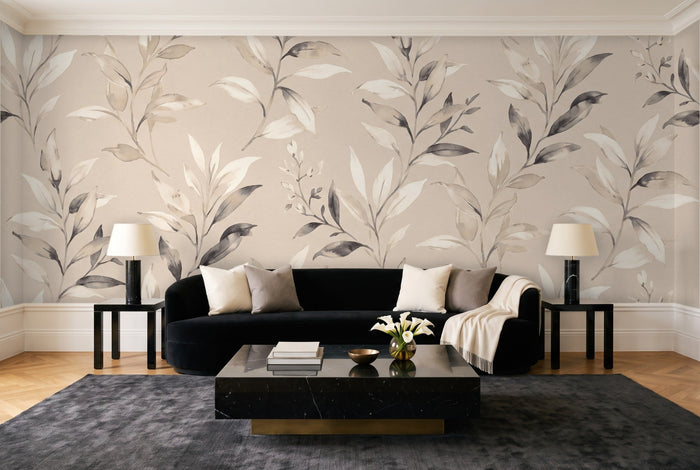
For detailed instructions, our guide on how to prepare a wall for wallpaper provides a comprehensive checklist. This preparation ensures your wall is ready for a stunning new design, like a calming botanical such as the Miyabi, Linen mural.
Can I wallpaper over the old wallpaper instead?
While it might seem like a tempting shortcut, wallpapering over existing wallpaper is not recommended. Doing so often leads to a poor-quality finish and can cause problems that are much harder to fix later. The investment in a premium product deserves a properly prepared foundation.
Applying new wallpaper over old can introduce several issues. The moisture from the new paste can cause the old paper's adhesive to loosen, leading to bubbling and peeling.
Seams from the old layer can show through, creating visible lines and an uneven texture on your new surface. Furthermore, the weight of two layers of paper can put a strain on the original adhesive, increasing the risk of it pulling away from the wall entirely.
For a flawless result, especially with a made-to-measure mural that is printed to your wall's exact dimensions, starting with a clean slate is essential. A properly prepared wall ensures perfect adhesion and a smooth, professional finish. You can find out how to measure correctly using our free online wallpaper calculator.
More murals to consider
 Glenalmond, OchrePrinted to your wall size
 Amberley, OchrePrinted to your wall size
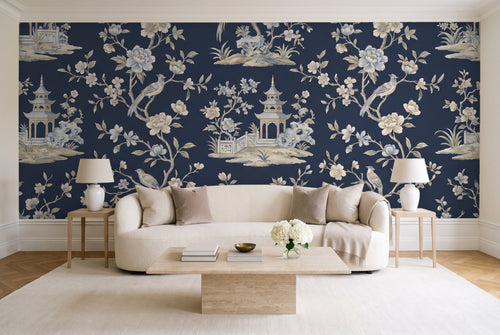
 Miyabi, LinenPrinted to your wall size
Common questions
How long does it take to remove wallpaper?
The time it takes to remove wallpaper varies greatly depending on the paper's age, type, and whether it has been painted over. A small room with modern, strippable wallpaper might take a few hours, while a larger room with old, stubborn paper could take a full weekend or more.
Can I use a steamer to remove wallpaper?
Yes, a wallpaper steamer is a very effective tool, especially for old and stubborn papers. It uses hot steam to melt the adhesive, making the paper easier to scrape off. However, steamers can be cumbersome and may damage the underlying plasterboard if held in one spot for too long.
What's the best homemade wallpaper remover solution?
A simple and effective homemade solution is a mixture of equal parts distilled white vinegar and hot water. The acidity of the vinegar helps to dissolve the wallpaper paste. For a slightly stronger mix, you can add a tablespoon of baking soda per litre of solution, which can help to soften the glue.
Do I need to prime the wall after removing wallpaper?
Yes, it is highly recommended to apply a coat of primer to the walls after you have removed wallpaper and cleaned off all the adhesive. A good quality primer will seal the wall surface, ensure even absorption of paint or new wallpaper paste, and help to highlight any imperfections you may have missed.
How do I remove Peel & Stick wallpaper?
Peel & Stick wallpaper is designed for easy removal. Start at a top corner and slowly peel the panel downwards at an angle. If you encounter resistance, you can gently warm the surface with a hairdryer on a low setting. This will soften the adhesive and allow the panel to peel away cleanly without residue.
Why is my wallpaper not coming off?
If your wallpaper is not coming off, it is likely due to one of two reasons. Either your removal solution is not penetrating the surface, which means you need to score it more thoroughly, or the solution has not been left to soak for long enough to dissolve the old, hardened adhesive.
Made to your measure
Murals for the wall you have in mind
Before you order