
The complete guide
Living Room Accent Wall Ideas for a Designer Look
Create a stunning focal point with our comprehensive guide to living room accent wall ideas. Learn how to choose the perfect wall, design, and material for a high-impact, designer look.

The short version
- An accent wall is a single wall with a distinct design, acting as a room's focal point.
- The best wall to accent is often the one you see first, typically behind the sofa or television.
- Wallpaper murals offer a single, continuous image perfectly scaled to your wall, creating a high-impact designer look.
- Consider the room's size, light, and existing furniture when choosing a colour or pattern.
- Proper wall preparation is essential for a smooth, professional finish, regardless of the material you choose.
An accent wall is a single wall in a room that features a different colour, pattern, or texture from the others. It is a powerful way to create a focal point, add personality, and introduce a specific mood to your living room without overwhelming the space. The right design can make a room feel larger, cosier, or more sophisticated.
What is an accent wall?
An accent wall, also known as a feature wall, is a design technique used to draw attention to a specific area of a room. Unlike painting or papering all four walls the same, this method singles out one surface for special treatment. This creates visual interest and can help to define zones within an open-plan living space.
The goal is to break up the monotony of a room and provide a backdrop for key furniture pieces or art. It can be as simple as a coat of bold paint or as intricate as a large-scale, made to measure wall mural. The key is that it contrasts with the other walls to make a deliberate statement.
An accent wall works by creating a hierarchy of visual importance. It tells you where to look first. This is why its placement and design are so critical to the overall success of your living room's interior design scheme.
Which wall should be the accent wall in a living room?
The best wall to choose for your accent is typically the natural focal point of the room, the one your eyes are drawn to when you first enter. For most living rooms, this is the wall behind the main sofa or the wall where the television and media unit are placed. Accenting this wall anchors the main seating area and creates a cohesive look.
Avoid choosing a wall with lots of doors or windows, as the breaks in the surface can disrupt the visual impact of your chosen design. You want a solid canvas to work with. If your living room has an architectural feature like a chimney breast or a recessed alcove, this is often an ideal candidate for an accent.
Consider the room's layout and flow. The accent wall should complement the arrangement of your furniture, not compete with it. Stand in the doorway and observe where your gaze naturally lands. This is almost always the right wall to highlight.
Murals made to your measure
 Cotterstock, SagePrinted to your wall size
 Basset, StonePrinted to your wall size
 Brooklyn Heights, LapisPrinted to your wall size
What are some popular accent wall design ideas?
There are many creative accent wall design ideas beyond a simple coat of paint. Textured finishes like wood panelling, shiplap, or exposed brick can add rustic or industrial character. For a more modern and artistic approach, a large-scale wall mural is an excellent choice, turning the entire wall into a single piece of art.
Geometric patterns, created with paint, tape, or wallpaper, can add a dynamic and contemporary feel. You could also consider a gallery wall, grouping together framed art and photographs to create a personalised feature. Another popular idea is using shelving to create a 'shelfie' accent wall, displaying books, plants, and decorative objects.
For those seeking a luxurious touch, consider designs with metallic elements. A pattern with hints of gold or silver can catch the light beautifully, adding a touch of glamour. You can find inspiration for these styles in collections like our Art Deco Wall Paper.
How can I use wallpaper for ideas for an accent wall in the living room?
Wallpaper is one of the most effective tools for creating a stunning accent wall. It offers a vast range of patterns, textures, and colours that are difficult to replicate with paint. From subtle textures to bold, dramatic prints, wallpaper provides endless possibilities for your living room decor.
A wall mural is a particularly powerful option. A mural is a single, non-repeating image that is printed to the exact dimensions of your wall. This means you can have a full-scale landscape, an abstract artwork, or a detailed cityscape that fits your space perfectly, without any awkward pattern repeats. This creates a bespoke, high-end feel that is central to many designer schemes.
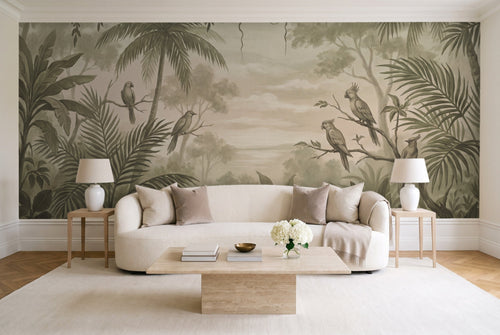
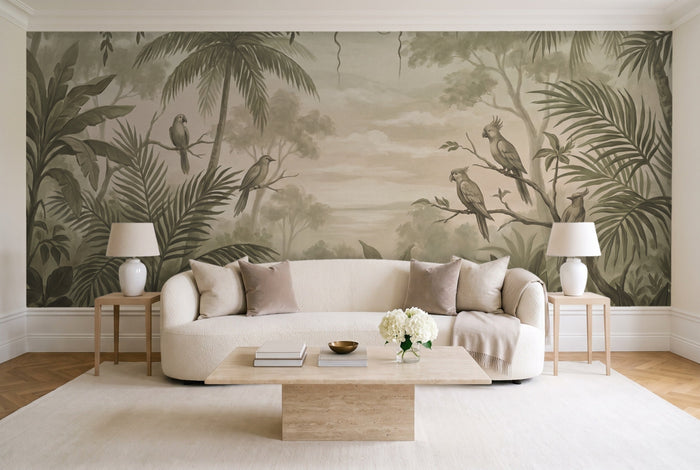
Choose a design that complements your furniture and overall style. For example, a quiet botanical mural such as the Cotterstock, Sage can create a serene and calming atmosphere. For a more whimsical and personal touch, a design like the Basset, Stone could celebrate a love for animals in a sophisticated way.
Should I use paint or wallpaper for my accent wall?
Choosing between paint and wallpaper depends on your budget, desired look, and willingness to tackle installation. Paint is often seen as the simpler, more affordable option for a quick colour update. Wallpaper, especially a wall mural, typically offers far more intricate and impactful design possibilities.
A key difference lies in the finish. While paint provides a solid block of colour, wallpaper can introduce complex patterns, textures, and even entire scenes. For a truly unique statement, a made to measure mural is often the better answer because it is created as one continuous image scaled to your wall, a feat impossible with paint or repeating wallpaper rolls.
Consider the long-term plan for your space. High-quality wallpaper is durable, while modern options like Peel & Stick are renter-friendly and easy to change. Here is a comparison to help you decide.
| Consideration | Advantage | Drawback |
|---|---|---|
| Paint | Cost-effective. Generally less expensive for materials and can be a straightforward DIY project. | Limited design. Primarily offers solid colours, with patterns requiring significant skill and time to create. |
| Wallpaper | Endless variety. Provides access to intricate patterns, textures, and large-scale images. | Higher initial cost. Can be more expensive than paint, especially for bespoke or designer options. |
| Wall Mural | Maximum impact. A single, seamless image tailored to your wall size for a bespoke, artistic look. | Precise installation. Hanging panels edge to edge requires care, though it is a manageable DIY task. |
Ready to Find Your Statement Wall?
Explore hundreds of designs, all made to measure for your living room.
What are some good living room accent wall ideas for a large wall?
A large wall offers a fantastic opportunity to make a bold statement. This is where large-scale wall murals truly shine, as they can fill the space without feeling repetitive. A panoramic landscape or a dramatic cityscape mural can create a sense of depth, making the room feel even larger and more immersive. This is a great way to add a 'window' to a world you love.
For example, a mural like the Brooklyn Heights, Lapis can bring a sophisticated urban energy to a spacious living room. The scale of the design is crucial; a small, busy pattern can get lost on a large wall, while a large, open pattern has room to breathe and make an impact. You can learn more about this effect in our guide to panoramic wall murals.
Do not be afraid of dark or bold colours on a large wall, especially if the room receives plenty of natural light. Deep blues, charcoals, or rich greens can create a cosy, enveloping feel. Combine a dark wall with lighter furniture and metallic accents to maintain balance and prevent the space from feeling too heavy.
What about ideas for a small accent wall?
A small accent wall, such as a chimney breast or the back of a recessed bookshelf, can be a jewel-box moment in your living room. Here, you can be more adventurous with pattern and colour without overwhelming the space. A vibrant floral, a complex geometric, or a quirky conversational print can add a burst of personality.
The key is to choose a design that is appropriately scaled. A massive pattern might be cut off awkwardly on a small surface. Look for designs where the main motifs will be fully visible within the smaller area.
This is another area where a made to measure mural has an advantage, as the design can be cropped and scaled to feature the most interesting part of the image on your specific wall.
For a subtle approach, consider a textured wallpaper in a neutral tone. This adds depth and interest without introducing a bold colour or pattern, which is ideal for maintaining a serene and minimalist aesthetic in a smaller room. Our guide to textured wallpaper for walls has many examples.
How do I choose a colour or pattern for my accent wall?
Start by looking at your existing furniture, rugs, and art. Your accent wall should complement these items, not clash with them. Pull a secondary colour from a cushion, a piece of art, or your rug and use a bolder shade of it for your accent wall. This creates a cohesive and intentional look.
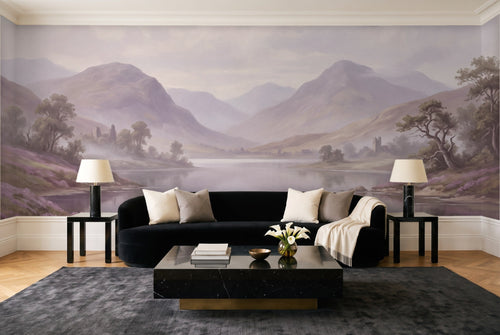
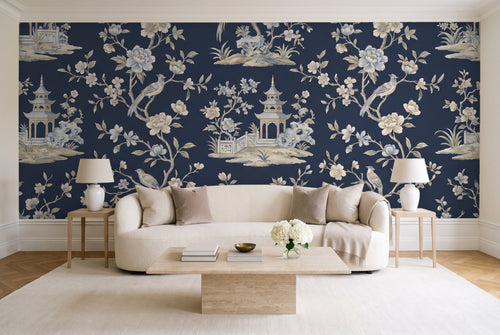
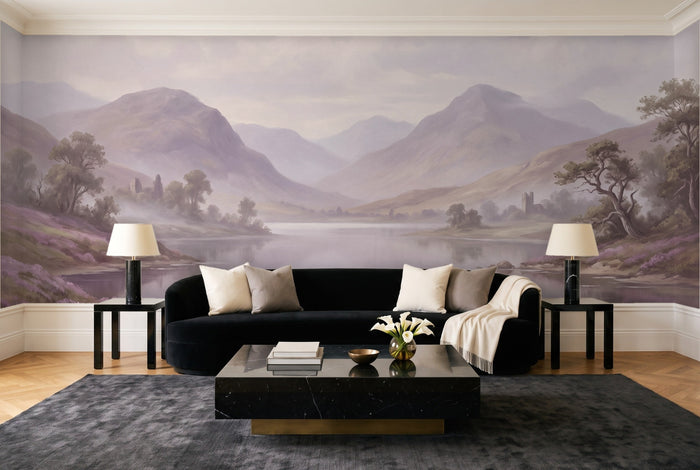
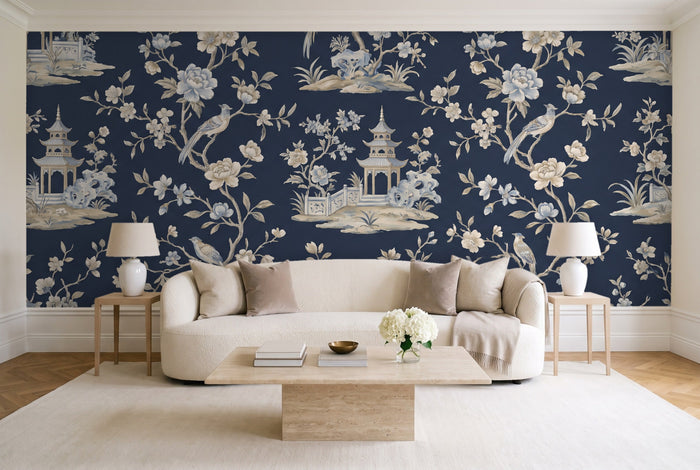
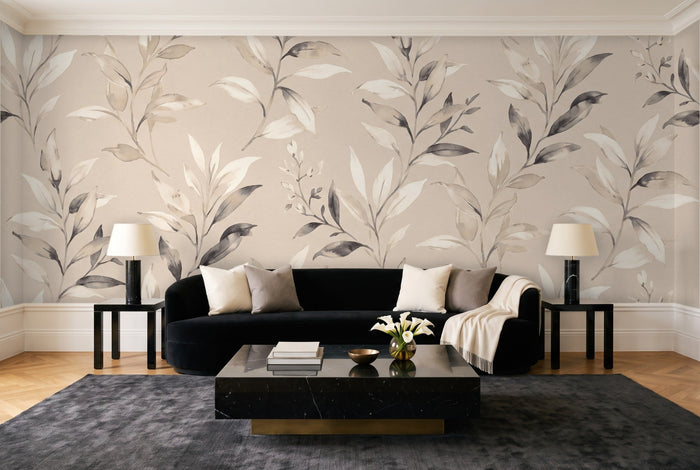
Consider the mood you want to create. Warm colours like reds, oranges, and yellows are energetic and social, while cool colours like blues, greens, and purples are calming and relaxing. A design like the Chinoiserie-style Summer Palace, Damson can add an air of regal tranquility, while a fresh floral like Yoshino, Jade can feel bright and optimistic.
Always order a sample first. The colour and scale of a design can look very different in your home's unique lighting conditions compared to how it appears on a screen. A sample allows you to see the material in person, tape it to the wall, and observe it at different times of the day before committing to a full mural.
How do I choose a colour for the other walls?
Once you have selected the design for your feature wall, the next question is what to do with the remaining three walls. The goal is to create a harmonious space where the accent wall stands out without feeling disconnected. There are three reliable strategies for choosing the right paint colour.
The most popular approach is to choose a neutral colour. A soft white, a pale grey, or a warm beige creates a clean, calm backdrop that allows your mural or patterned wallpaper to be the undisputed star of the room. This method is versatile and works with almost any accent wall design, from bold and colourful to subtle and textured.
For a more integrated, designer look, select a subtle background colour from within your wallpaper design. For instance, if your mural has a deep blue sky with hints of a soft cream in the clouds, painting the other walls in that same cream colour will tie the whole room together beautifully. This creates a cohesive palette that feels intentional and professionally curated.
A third option is to use a tonal approach. This involves painting the other walls in a much lighter shade of the accent wall's dominant colour. If your feature wall is a deep forest green, the other walls could be a very pale sage green. This creates a sophisticated, layered look with depth and character, wrapping the room in a gentle echo of the main feature.
What should I check before starting my accent wall project?
Before you choose your design or pick up any tools, a quick health check of your chosen wall is essential. This preliminary inspection can save you significant time and effort later by ensuring the surface is suitable for wallpapering.
First, check for damp. Press your hand against the wall. Does it feel cold or damp to the touch? Look for any signs of mould, mildew, or discoloured patches, especially near corners, ceilings, or skirting boards. Wallpapering over a damp wall will eventually lead to peeling and adhesion failure. If you suspect damp, you must identify and resolve the root cause before proceeding.
Next, assess the surface condition. Is the existing paint sound, or is it flaking and peeling? Scrape a small, inconspicuous area with a coin. If the paint comes away easily, it will need to be removed. Run your hand over the wall to feel for bumps, dents, or an uneven texture. These imperfections will show through the wallpaper, so they need to be filled and sanded for a smooth finish.
Finally, locate all electrical fittings. Make a note of sockets, light switches, and thermostats on the wall. You will need to trim around these, and it is a vital safety practice to turn off the electricity to that circuit at the consumer unit before you begin working with wet paste or water near these fittings.
How do I prepare the wall for my wallpaper accent?
Proper wall preparation is the most important step for achieving a professional-looking finish. A well-prepared surface ensures your wallpaper adheres correctly and looks smooth, without any bumps or imperfections showing through. The process is straightforward but should not be rushed.
Your wall must be smooth, dry, and clean. Any old wallpaper or flaking paint must be completely removed. Use a filler to patch any holes or cracks, then sand the patches smooth once they are dry. It is crucial that the surface is uniform. For a full breakdown of the steps, consult our guide on how to prepare a wall for wallpaper.
Finally, clean the wall with a mild detergent or sugar soap to remove any dust or grease, and let it dry completely. If you have recently painted the wall, you must wait at least three to four weeks for the paint to fully cure before applying wallpaper. Applying wallpaper to uncured paint can cause bubbling and adhesion failure.
How do I measure my wall for a made to measure mural?
Measuring for a made to measure mural is simpler than for traditional wallpaper because you do not need to calculate pattern repeats. You just need the overall width and height of the wall. Casavono prints each mural to order based on the exact dimensions you provide.
Follow this simple process:
- Use a metal tape measure for accuracy. Measure the width of the wall from corner to corner at the widest point.
- Next, measure the height of the wall from the ceiling to the floor at the tallest point.
- Even if your wall has doors, windows, or sockets, measure the full rectangular area as if they were not there. You will trim around these obstacles during installation.
- Always add about 4 inches (10 cm) to both your final width and height measurements. This extra margin, known as bleed, accounts for slight variations in wall straightness and ensures you have enough material for a perfect fit. The excess is simply trimmed away after hanging.
Worked Example: Measuring a Typical Living Room Wall
Let's imagine your living room wall is not perfectly square, which is very common in most homes. Here is how to measure it correctly.
- Step 1: Measure the Width. You measure the width at the top, middle, and bottom. Your measurements are 138 inches (350.5 cm) at the top, 138.5 inches (351.8 cm) in the middle, and 138.25 inches (351.2 cm) at the bottom. You must use the widest measurement, which is 138.5 inches (351.8 cm).
- Step 2: Measure the Height. You measure the height on the left side, in the centre, and on the right side. Your measurements are 96 inches (243.8 cm) on the left, 96.5 inches (245.1 cm) in the centre, and 96.25 inches (244.5 cm) on the right. You must use the tallest measurement, which is 96.5 inches (245.1 cm).
-
Step 3: Add the Bleed. Now, you add the recommended 4 inches (10 cm) to both the widest and tallest measurements to ensure full coverage.
Final Width: 138.5 in + 4 in = 142.5 inches (or 351.8 cm + 10 cm = 361.8 cm).
Final Height: 96.5 in + 4 in = 100.5 inches (or 245.1 cm + 10 cm = 255.1 cm).
These are the final dimensions you would use when ordering your made to measure mural. This extra margin provides the safety net needed for a perfect trim.
For a detailed walkthrough and to check your numbers, you can use a free online wallpaper calculator. This tool helps confirm how much material you need for your specific project.
Pro Tip. Double-check your measurements. As made to measure items are printed specifically for your wall, they typically cannot be returned for a change of mind or incorrect measurements. Measure twice to be sure.
What tools do I need for a wallpaper accent wall?
Having the right tools on hand before you begin will make the installation process much smoother. The specific tools you need will vary slightly depending on the type of wallpaper you choose: Non-Pasted, Pre-Pasted, or Peel & Stick. However, a basic kit is required for all types.
Here is a list of essential tools:
- Tape measure
- Pencil
- Spirit level or laser level
- Sharp utility knife with plenty of fresh blades
- A wallpaper smoothing tool or squeegee
- A clean, damp sponge
For specific paper types, you will need additional items. For classic Non-Pasted paper, you will also need wallpaper paste, a pasting brush or roller, and a tray. For Pre-Pasted paper, you will need a tray of water or a spray bottle to activate the adhesive. For Peel & Stick, a squeegee is the primary application tool. A comprehensive list can be found in our main installation guide.
Common Installation Mistakes and How to Fix Them
A successful wallpaper installation is all about preparation and patience. While the process is manageable for a DIY project, a few common pitfalls can arise. Knowing what they are and how to correct them will help you achieve a flawless finish.
Mistake 1: Starting with a crooked first panel. The first panel is the most important, as all others will align with it. If it is not perfectly vertical, the entire mural will slant across the wall.
How to Fix: Never assume your wall or ceiling is straight.
Before hanging the first panel, use a spirit level and a pencil to draw a perfectly vertical plumb line on the wall, one panel's width in from the left corner (e.g., 30 inches or 76 cm for a Casavono mural). Align the right edge of your first panel with this line. This guarantees your entire installation will be straight.
Mistake 2: Leaving bubbles or wrinkles. Air bubbles can get trapped under the paper during hanging, creating an uneven surface.
How to Fix: As you hang each panel, smooth it down from the centre outwards using a wallpaper smoothing tool or squeegee.
This pushes any air bubbles towards the edges. If you spot a stubborn bubble later, you can often prick it with a fine pin or the tip of your utility knife to release the air, then gently smooth the paper down.
Mistake 3: Tearing the paper when trimming. Using a dull knife to trim the excess wallpaper at the ceiling, floor, or around sockets can snag and tear the paper, creating a ragged edge.
How to Fix: A sharp blade is essential.
Use a utility knife with a brand new blade, and be prepared to snap off sections or change blades frequently, sometimes after just a few cuts, especially when the paper is damp with paste or water. Press the paper firmly into the corner with your smoothing tool and cut against it for a clean, straight line.
More murals to consider
 Summer Palace, DamsonPrinted to your wall size
 Yoshino, JadePrinted to your wall size
 Folio, OatPrinted to your wall size
Common questions
Can I put an accent wall in a small living room?
Yes, an accent wall can work beautifully in a small living room. It can create a focal point and even make the space feel larger by drawing the eye. Choose a large-scale, uncluttered design or a panoramic mural with depth to enhance the sense of space, rather than a small, busy pattern.
Is an accent wall still in style?
Accent walls are a timeless design feature that remains very much in style. The trend has evolved from simple painted walls to more sophisticated applications using textured materials, wood panelling, and large-scale art murals. A well-designed accent wall is a classic way to add personality and focus to a room.
Which is the best wallpaper for a living room accent wall?
The best wallpaper depends on your lifestyle. For durability in high-traffic areas, a classic Non-Pasted paper with its smooth matte finish is an excellent choice. If you are a renter or like to change your decor often, a repositionable Peel & Stick paper offers great flexibility. All Casavono papers are PVC-free.
What if my accent wall has a door or window?
You can still create a beautiful accent wall. When measuring, ignore the door or window and provide the full wall dimensions. During installation, you will hang the wallpaper panel over the opening and then carefully trim away the excess paper around the frame with a sharp utility knife for a clean finish.
Can I create an accent wall on a textured surface?
For best results, wallpaper should be applied to a smooth, clean, and dry wall. If your wall has a light texture, you may be able to sand it smooth. For heavier textures like popcorn or knockdown, the wall will need to be skim-coated with drywall compound to create a flat surface before papering.
How do I choose a design that won't date quickly?
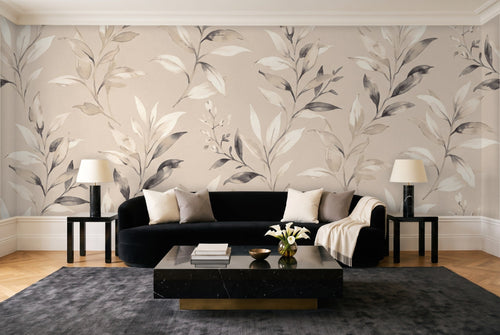
To ensure longevity, opt for classic patterns and timeless themes. Botanical prints, landscapes, subtle geometric shapes, or designs inspired by classical art tend to have more staying power than overly specific trends. A design like the library-themed Folio, Oat offers a classic, sophisticated look that will endure.
Made to your measure
Murals for the wall you have in mind
Before you order